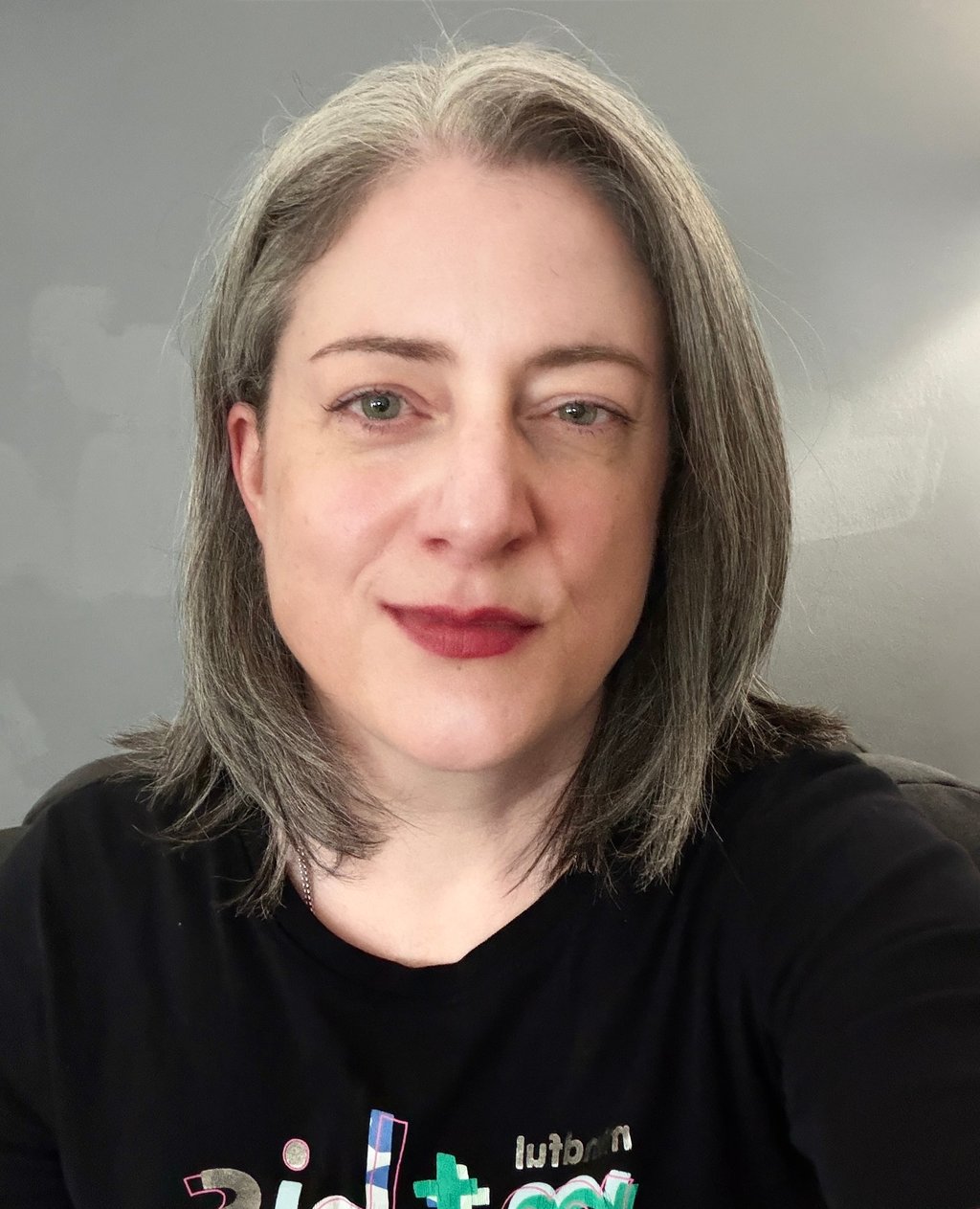

My Personal Journey into Mindfulness
2017 was the year when one of my chronic conditions reached its worst point yet. I could barely leave the house and was on the verge of needing blood transfusions. Cortisone had worn my body down and had long since stopped working. The German public healthcare system had nothing to offer me, so I fled to Vienna, where I had a private specialist who advised me to move there for better medical care.
With the help of my wonderful network, I made this life-changing move and received the medical care I needed, which has eased the burden on my life.
At the time, I didn’t yet know that things would get really bad again due to the onset of perimenopause combined with untreated ADHD.
As I had hourlong reflections with my buddhist neighbour and friend Brigitte covering buddhism, meditation and the amazing intersection with hypnosystemic approaches I was ready to give it a try. Like so many people before me "when things fall apart".
I received my first meditation instruction from Brigitte. It was breath meditation, also known as shamatha. a form of meditation of breath. She said by way of introduction: “And kindness toward yourself is the most important thing in any practice.”
Back then I thought, “Yeah, fine, okay, whatever; let’s finally get started.” -D
Today, self-compassion and self-kindness are the universal pillars of my practice and also accompany the pacing practice I now use to navigate my life with chronic multisystemic illnesses.
2019: Mindful Communication
In 2019, my dear Buddhist friend encouraged me to attend a workshop with Susan Gilis Chapman, author of the book The 5 Keys to Mindful Communication.
What a stroke of luck. Learning a concept that deepened my understanding of how we humans open up, close off, and navigate the transition between the two significantly expanded my knowledge of communication and trauma psychology.
I then completed the Greenzone Leader and Mindful Communication Teacher training, and especially during the pandemic, I had a community with whom I experienced support and guidance in dealing with unprocessed trauma through Greenzone sessions—for which I remain grateful to this day.
Deep Listening in a group has given me more than all the psychotherapies I’d had before. Because in these so-called Greenzones, something happened that I believe is the cornerstone of all healing processes: acknowledging, honoring, and mindfully holding both suffering and joy without attempting to solve them, relativize them, or anything of the sort. Being heard, seen, and respected.
When has a small group ever given you the gift of Deep Listening, where you had 10 minutes to share whatever needed to be shared? That experience alone was transformative for me. And giving this gift to others in the group is also a profound experience. I’m already looking forward to offering the first Greenzones.
2021: Becoming a Meditation Teacher
Although I wanted to share the treasures of mindful communication, I was missing a crucial foundation: teaching meditation practice.
Through the MMTCP (Mindfulness Meditation Teacher Certification Program with Jack Kornfield and Tara Brach), I spent two years gaining depth and breadth for my own practice as well as a profound training as a meditation teacher, including a 1.5-year Racial Awareness Program based on the Affinity Concept (groups for white people, for Black/PoC, and Third Option), in which I was able to reflect on my own racist conditioning as a white German woman and on how I position and conduct myself as a meditation teacher, and how I can be an ally for aspects of identity that do not personally affect me. My own marginalization as a chronically ill autistic person with ADHD was very helpful in this regard.
Essentially, in the mindfulness training programs, I primarily sharpened my structural perspective; my awareness of structural violence and systemic trauma, and thus also of the question of how I can help people shed their shame.
For as Pellicot so powerfully put it: Shame must switch sides.
This applies not only to patriarchal violence. It also applies to capitalist violence: ableism, the logic of exploitation, toxic performance demands, etc. And even relatively privileged people are allowed to shed shame; shame in the form of fundamental self-doubt, dysfunctional performance conditioning, and more.
The mindfulness practice I offer is not meant to stop with us as individuals. On the one hand, we can use it to survive within a toxic system; on the other hand, that cannot be all there is to it. Once we are strengthened, we must stand in solidarity to advocate for a better life for everyone—so that no one has to fear for their life or safety anymore.
Secularism & Recognition of Buddhist Roots
I understand very well the aversion many people feel toward a vague concept of spirituality. At the same time, as a white person, I do not wish to perpetuate the cultural appropriation of significant worldviews and practices from the Global South—a phenomenon that is particularly extreme in the case of yoga, for example. I teach Vipassana practice, and despite my secular outlook, I would like to bow before my Buddhist teachers and express my humility and gratitude for the practice that I am privileged to live and share with others.
2024: Starting my teacher journey
After completing my meditation teacher training, I offered my first courses (Basics of Mindfulness Practice and a special course for people on the autism spectrum) and now want to make my offerings accessible to more people.
The courses for individuals are designed to be accessible to as many people as possible. So you’ll be waiting in vain for invitations like, “Look forward to 2 days at Castle So-and-so in beautiful Switzerland for just €2,000 plus room and board!”
To accommodate different financial situations, I’ve structured the course prices on a sliding scale: sponsorship, standard, and solidarity rates.
Courses for institutions and companies are correspondingly more expensive. This allows me, on the one hand, to create class-conscious access, and on the other, to operate sustainably for myself.
I look forward to welcoming everyone who celebrates and supports this strategy, so that we can all become more and more allies for one another.